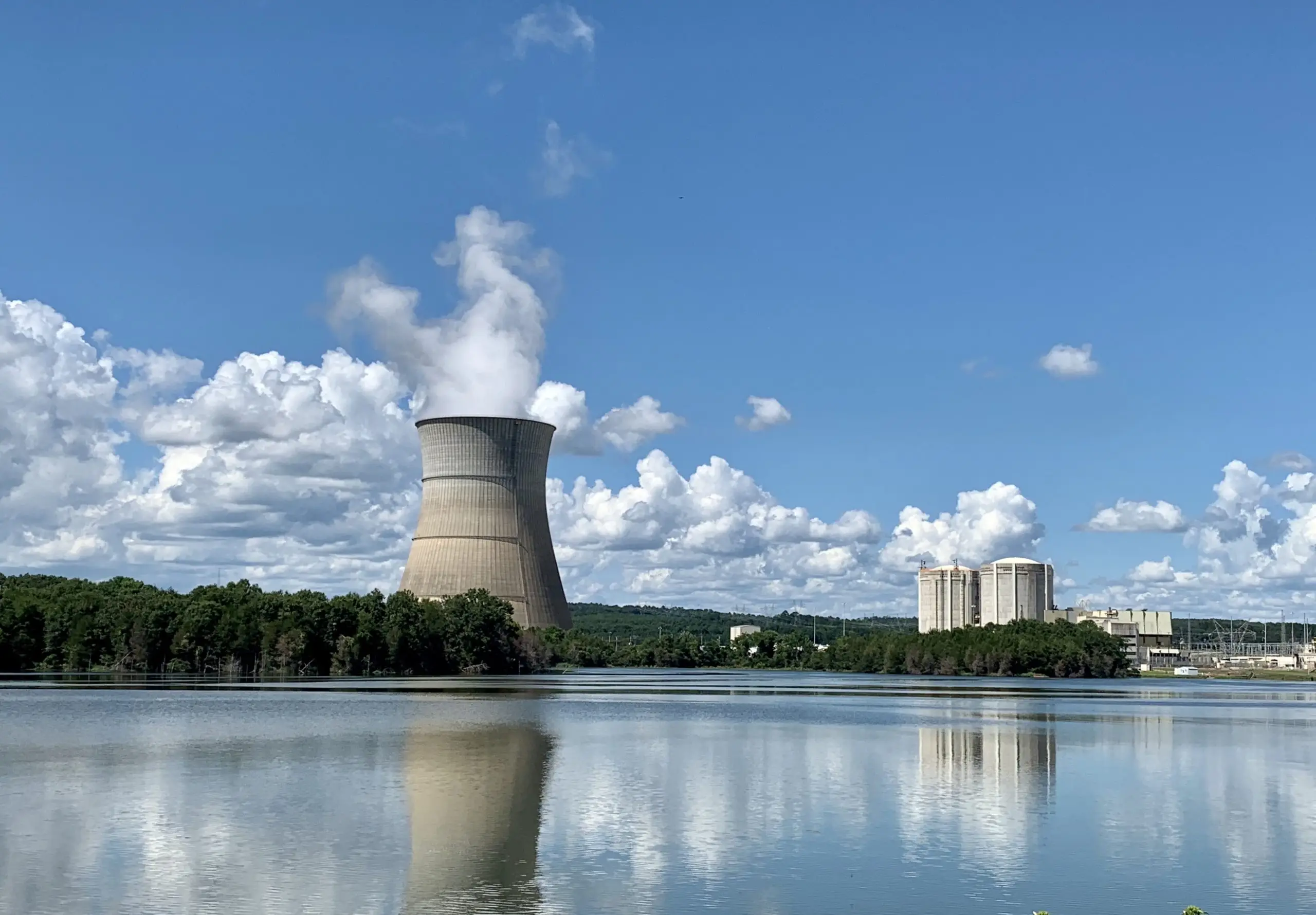
On June 16, 2023, I participated in the strategic project presentation before EDF domain experts. The challenge was no longer purely technical, but centered on cybersecurity: how do we prove that a connected solution does not compromise nuclear power plant data sovereignty?
The Air-Gap Architecture & Dual-Network Isolation
To convince stakeholders, we relied on strict physical and logical isolation via the Modicon M262:
- Separated Interfaces: Utilizing the two independent Ethernet ports of the M262. Port ETH1 (84.0.2.50) handles the local trash rack cleaner network, while port ETH2 (85.0.2.2) is dedicated to outbound MQTT telemetry.
- Strict Segmentation: Routing between the two network interfaces is explicitly disabled, creating an uncrossable barrier against unauthorized network traffic.
Flexible & Sovereign Data Storage
We presented EDF with a solution matrix adaptable to site-specific data sensitivity and infrastructure rules:
- Communication Channels: 4G cellular modems, industrial Wi-Fi, Ethernet, or local software deployments.
- Data Residency: Choice between a Secured Cloud or deployment directly on EDF On-Premise internal servers for absolute control.
Value Proposition: CSC Monitoring Framework
The final pitch relied on the CSC framework, a cornerstone of Industry 4.0:
- Control (Contrôler): Real-time visibility via REEL VISION® → Immediate response during anomalies.
- Supervise (Surveiller): Granular metrics (top 10 faults, rack clogging rate) to optimize cleaning cycles.
- Knowledge (Connaître): Long-term analytics for predictive maintenance, preventing unscheduled downtime.
“In nuclear engineering, cybersecurity is not an impediment to innovation—it is the framework that enables it.”